STUDIO
MAREAS
TENSILE MEMBRANE STUDY
Interactive exploration of tensile membrane structures for conceptual and optimal design
_JPG.jpg)
MARKET
Building systems
LOCATION
-
FIRM
-
SERVICES
Research
SIZE
-
Info about image here
Tensile membrane structures offer flexible solutions with a shape that dynamically changes under applied forces, resulting in a 'form-found' final shape. This challenge prompted research into form-finding exercises to explore how tensile membranes interact with architectural elements. Understanding how these structures shift shape in response to forces is essential, as it involves analyzing how the edges adapt and how the tensile material aligns with the architectural plane.
The process involves experimenting with various tensile structure shapes and meticulously documenting how their form and edge conditions evolve over time. This investigation looks into the transformation of curvature and overall shape, as well as the interaction between the tensile fabric and these changes.
By analyzing how different architectural forms adapt to the edges of the tensile fabric, the study identified a method where tensile membranes meet architecture, offering an innovative solution for their interaction.


An analysis of how the membrane's shape shifts under varying levels of applied force, comparing its original form to the new configuration.
Form-finding as a design process explores shapes and configurations through experimentation. How materials respond to forces and constraints is crucial to successful design.

Info about image here

Info about image here

Info about image here

Info about image here
Shape-shifting and form-finding
As pressure is applied to the tensile membrane, its edge shifts, creating a gap between the architectural wall and the membrane. The goal is to develop an alternative design that bridges this gap. A proposed concept involves two walls that bow inward and outward, challenging traditional architectural forms by allowing the structure to shift in response to the adjacent tensile membrane.
As the walls adapt to the membrane’s evolved shape, the inner wall becomes dynamic, either folding inward or remains static. This flexible arrangement opens up a new spatial opportunity between the walls, which can accommodate functional elements such as circulation or building systems.
This interaction between rigid architecture and flexible tensile structures introduces a dynamic sense of movement, transforming the design into an organic, fluid composition. It responds to practical demands and enhances the visual experience of the tensile system, creating an integrated and harmonious architectural form.
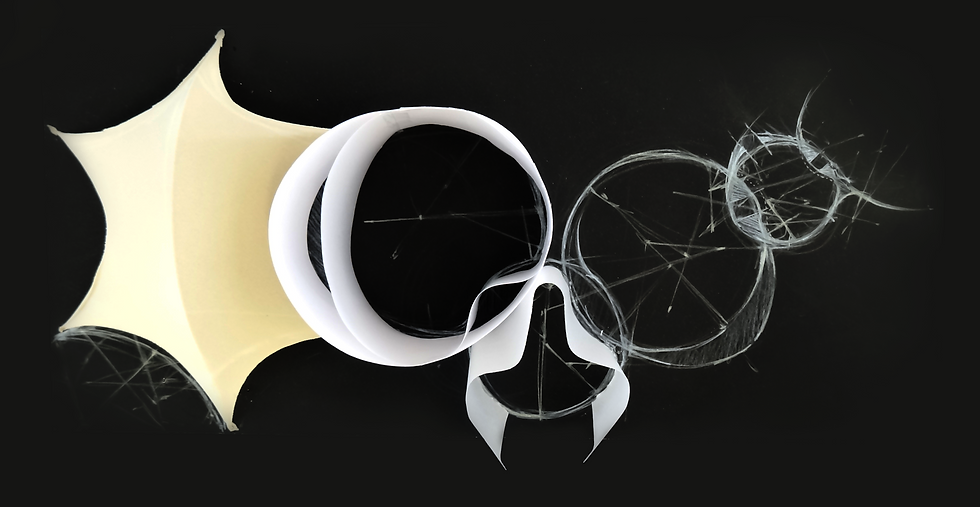
A conceptual model illustrates the relationship between the membrane’s edge and the double wall, highlighting the design process behind their interaction.
Just as the tide ebbs and flows, the architectural wall extends to engage with the edge of the tensile membrane, then recedes to reconnect with the building. The gap between the walls is purposefully designed to gracefully celebrate the interaction between the solid architecture and the lightweight membrane.

Circulation takes place between the double walls, offering users a playful and immersive experience of being "inside" the building.
Thick walls express the dynamic action taking place between both walls